What people want most in life is love – or so psychologists had thought for a long time. Latest research in the field, however, appears to indicate that humans crave respect even more: and, above all, the kind of respect which is most hurtfully denied to them. Beautiful women want to be admired for their brains, wispy guys for their masculinity, and so on.
What is true for individuals is true for nations, too. Italians are admired the world over for many things: their fashion sense, their sprezzatura, the natural ease with which they move around. Italians gracefully accept the accolades but, as I have found over the years, would prefer a rounder picture.
Past generations of Italians were even prepared to pay a terrible price for such a “rounding”: In WWI, it was the declared policy of the Italian government to stamp out once and for all the prejudice of the cowardly Italian soldier. This lay at the root of the Isonzo tragedy in which tens of thousands of Italian recruits died, bravely marching up the mountains in wave after wave straight into the Austrians’ machine gun fire.
National pride still plays a big part in Italian politics. Public projects are generally conducted with an eye on the country’s neighbours, above all the French who tend to see all their neighbours as semi-civilized savages: the Germans as dangerous savages, the Spaniards as gloomy savages, and the Italians as childishly happy ones. Nothing hurts Italians more than that.
So when the baroque kings of Southern Italy – who came from a sideline of the Bourbon family to boot, the dynasty that ruled over France – felt they needed a new home, there could only ever have been one standard: the palace had to be bigger and better than Versailles. Show them we are not their country cousins!
This is how the Royal Palace of Caserta came into being (located approx. 30 km to the north of Naples), at the time the biggest palace in Europe (and still the world’s largest in terms of volume).
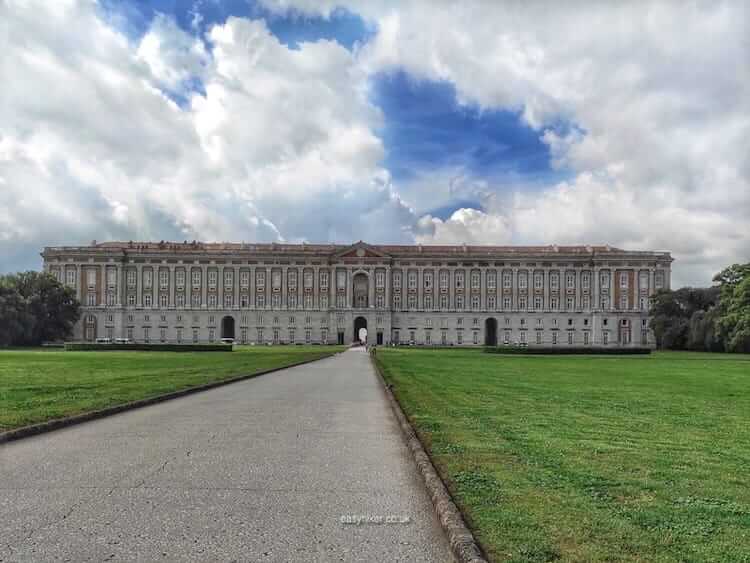
Which is not to say, however, that the Caserta Palace is a straight clone of Louis XIV’s blueprint: it was built to imitate a style, not specific individual features. (I nicked that insight from Anthony Blunt. He stole Britain’s state secrets to hand them over to Joe Stalin, so he would not – if he were still alive – be in a position to complain that somebody had lifted an observation from one of his pieces on art history.)
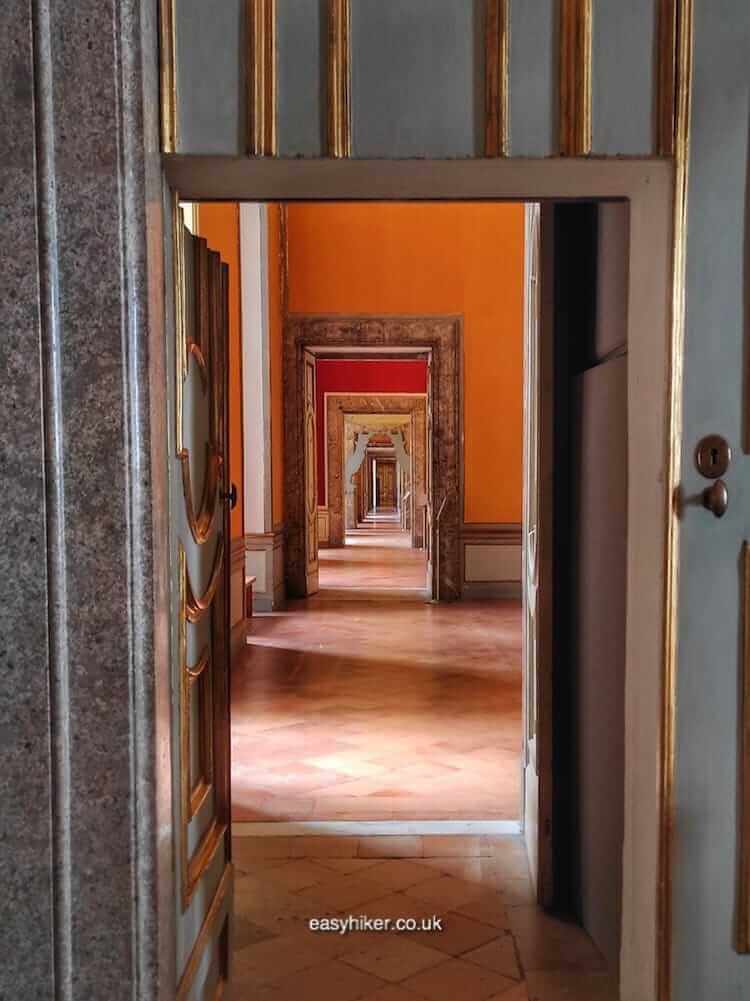
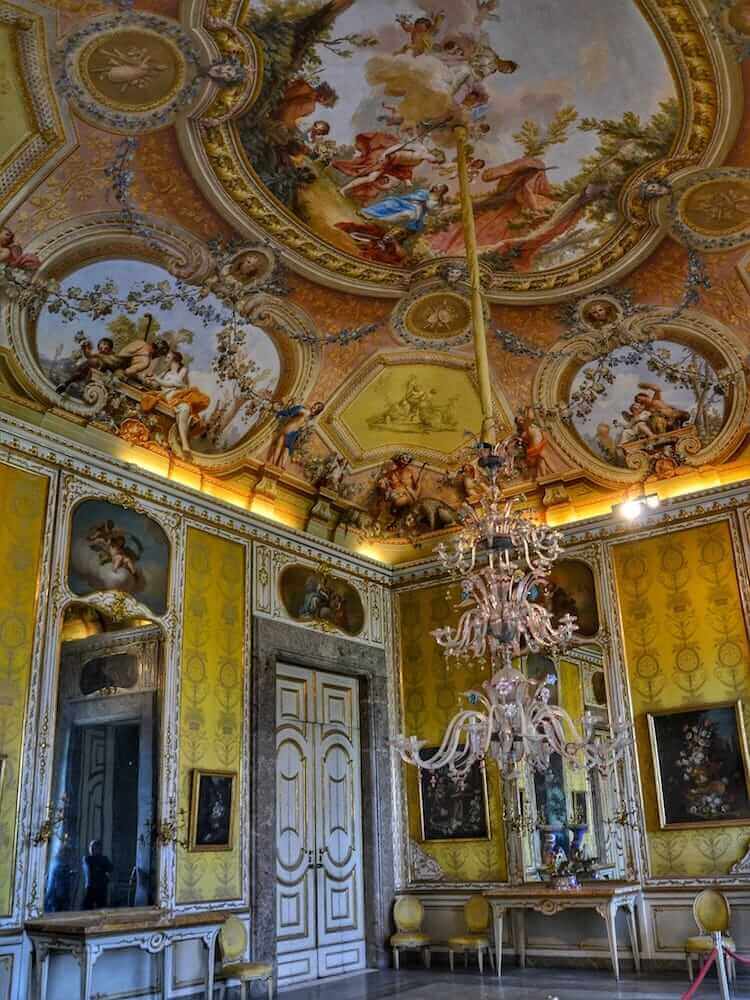
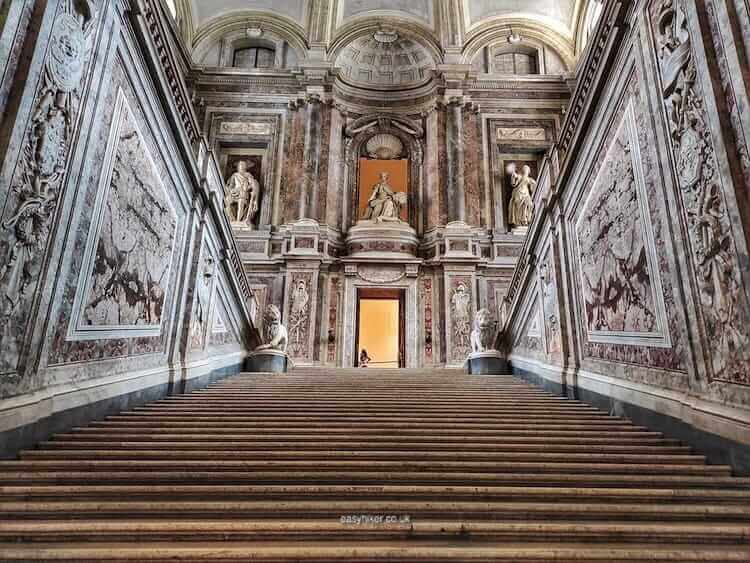
The elements of the Grand Baroque style are all there: the long corridors that lead to rooms without doors, …
… the chandeliers, the painted ceilings, …
… and the complex narratives of the outdoor fountains.
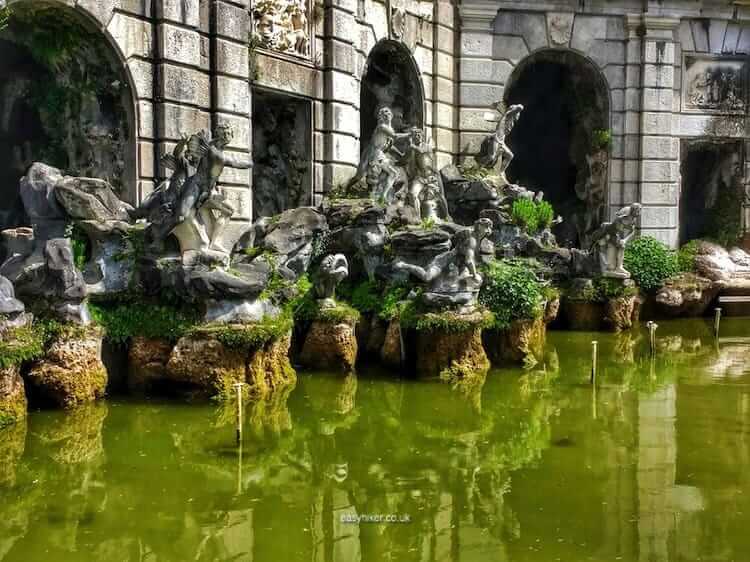
The mix, however, is different: Versailles is a broth prepared by a great many chefs over a great many years, while Caserta represents the vision “of a single architect at a single moment”. (Another quote of Anthony Blunt’s, although this is only partly true. I warned you not to trust that guy!)
The architect in question was Luigi Vanvitelli (born in Rome as Lodewijk van Wittel, the son of a Dutch émigré painter), and his vision was one of overwhelming force, power and glory: the details don’t matter, all that counts is the overall effect.
The gardens, the main focus of our personal interest, tell a similar story, albeit one with a key difference.
Historic buildings are frozen pieces of the past but gardens live in time, and their fate ultimately lies in the hands of the people whose task is to nurture them. This works a little like a game of Chinese whispers: the careless transmission of a single detail can trigger a chain of events at the end of which you will be left with a sad caricature of the original design.
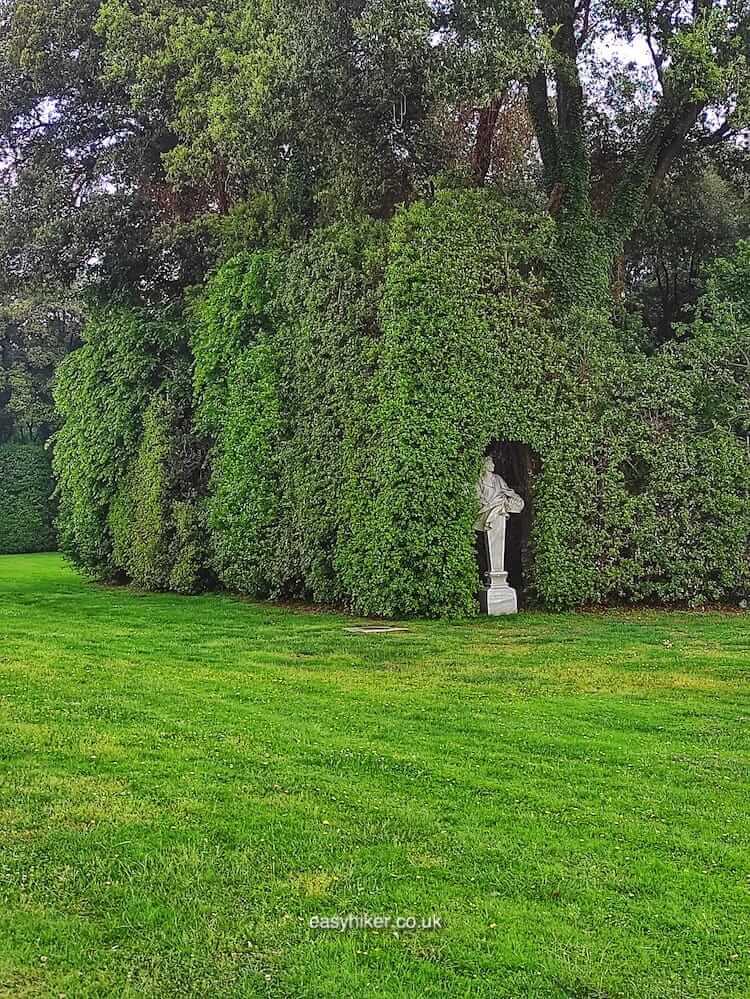
In today’s Caserta Gardens, one can still see what geometric shape the trees were meant to adopt, just about. Mainly, however, you see where things went wrong. These two national traditions, French formality and the Italians’ cavalier treatment of rules, appear not to mix particularly well.
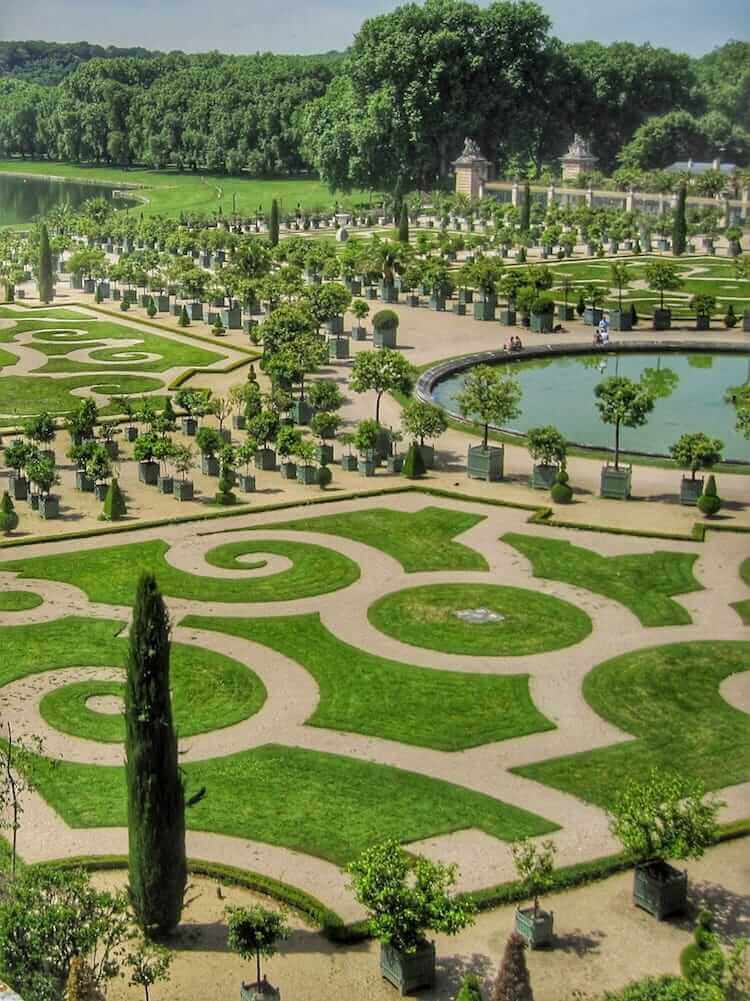
Just as a reminder: this is what the gardens at Versailles look like today.
Compare this with the gardens of the Royal Palace of Caserta …
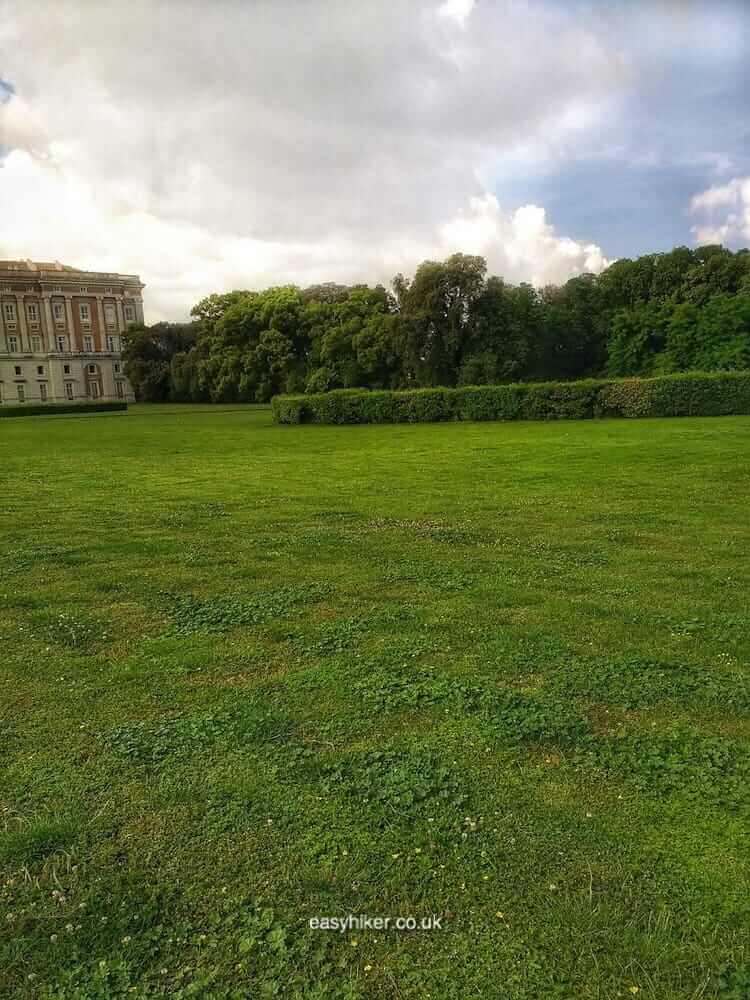
… whose unevenly cut hedges and weeds on the lawn actually reminded me more of our own attempts at home gardening than of anything we had ever seen in a place like this.
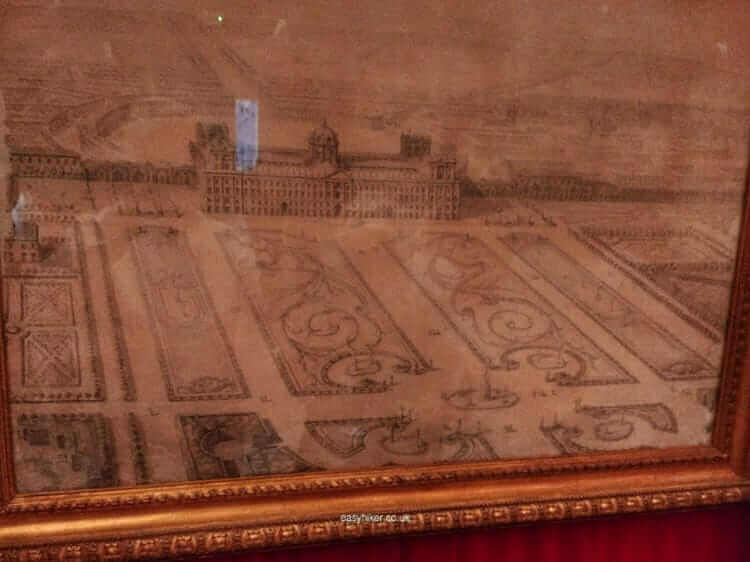
Convinced that these surfaces had once looked entirely different, I was resolved to later perform an Internet search for contemporary drawings to corroborate my suspicion that Italian gardeners, over the centuries, had lost interest in preserving the original features entrusted to them.
There was, as it turned out, no need to consult the Internet: the evidence was right there in the palace itself.
The most spectacular features of Caserta Gardens are the fountains that have been arranged alongside a canal which draws a straight line between the palace and the edge of the earth.
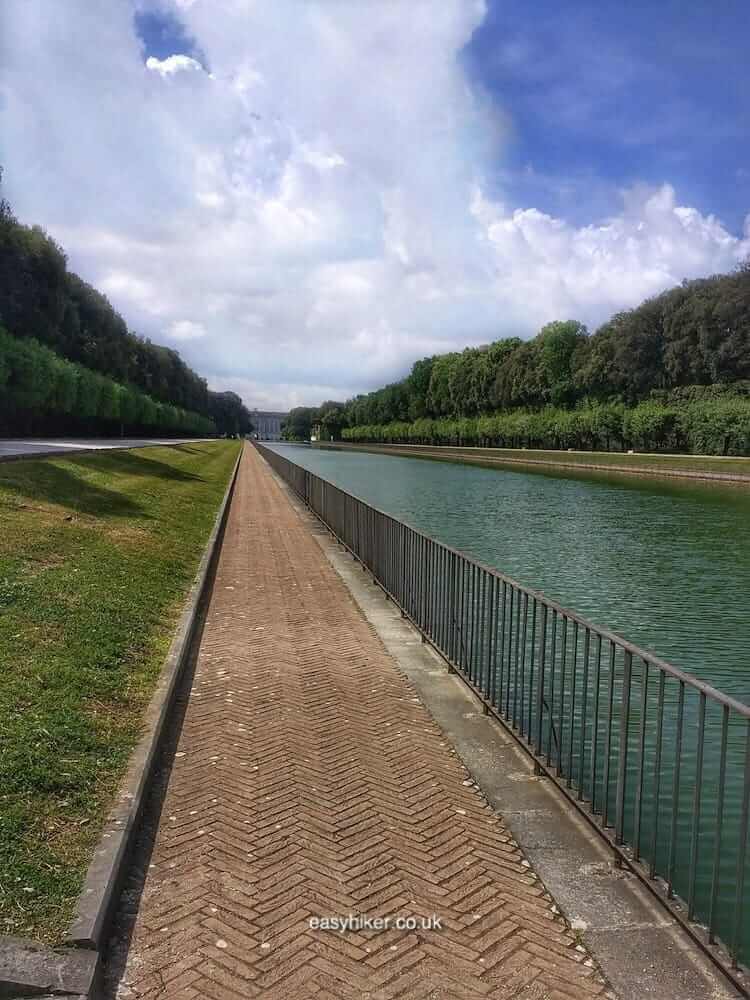
The official literature says: “The most bewitching aspect of the design of these fountains is that they appear to be spread over a much shorter distance than the 3 km stretch of the alleyway they actually cover.”
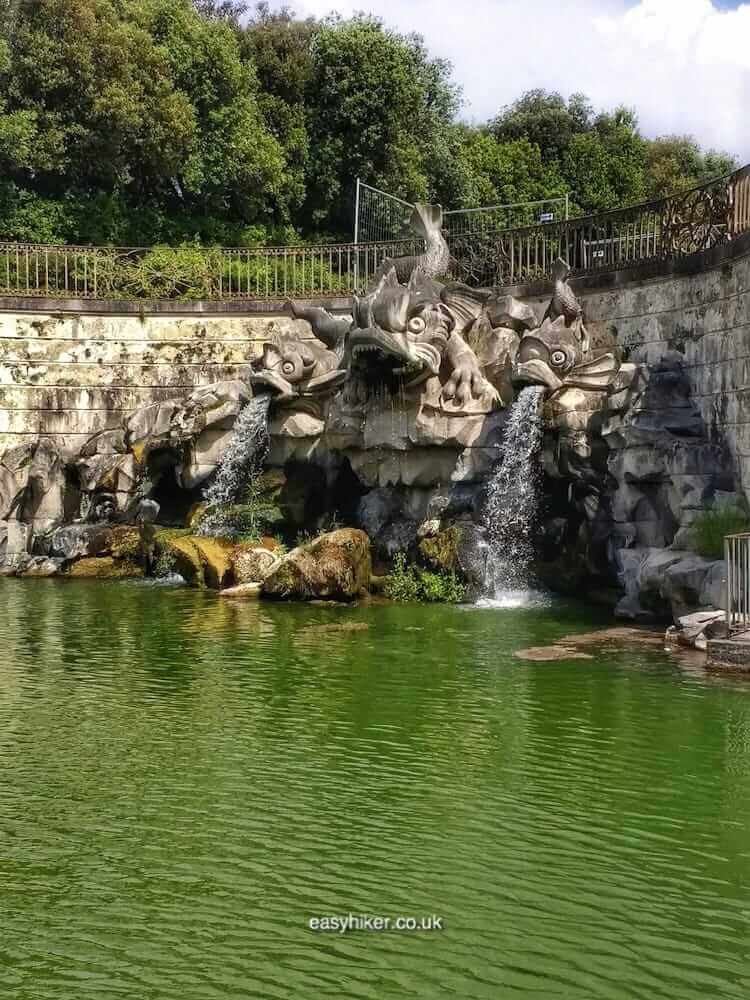
Personally, we felt we had been walking all day (blazing heat! no shade!) when we arrived at the first of the fountains – where we were rewarded for our efforts by an encounter with the scariest fish we had ever seen.
After this, we felt in need of some light relief and turned to Caserta Town which is neatly arranged around the palace.
Caserta passes for what is, by Italian standards, a New Town (the Stevenage of the South). In fact, Old Caserta, Casertavecchia, still exists (pop.: 187), but most of its inhabitants were moved here, about 10 kilometres away, in the early 18th century to provide a workforce for the needs of the palace.
Still, you will find many features that may be familiar to you from visits of other small provincial towns in Italy, such as a church, a piazza, an ice cream parlour.
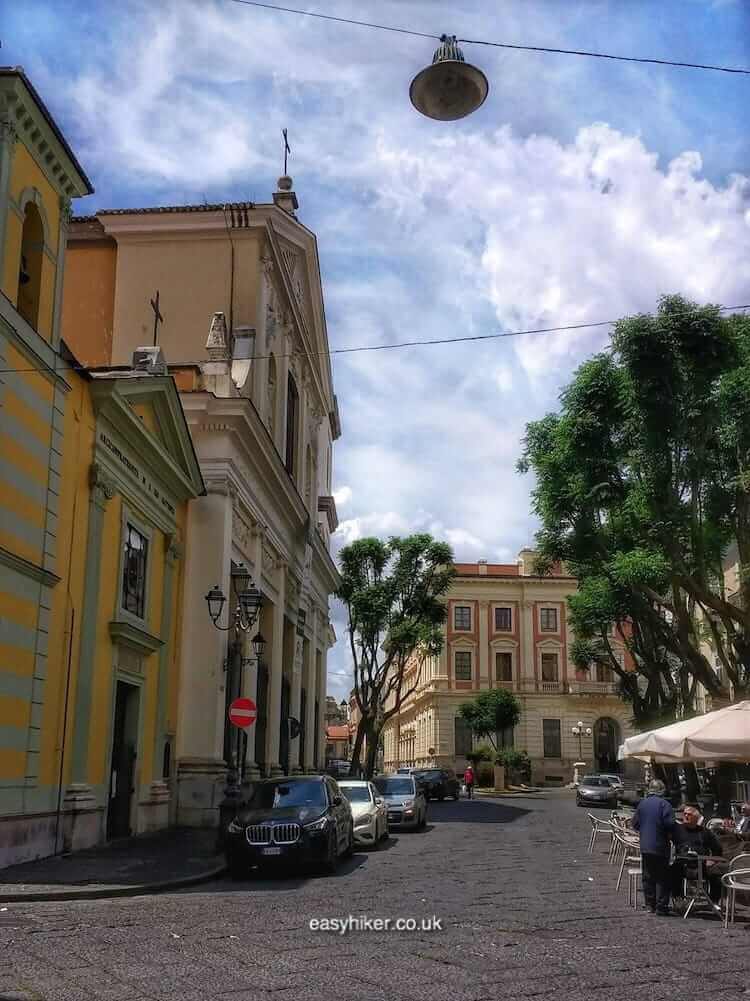
Caserta demonstrates elements of natural beauty and charm …
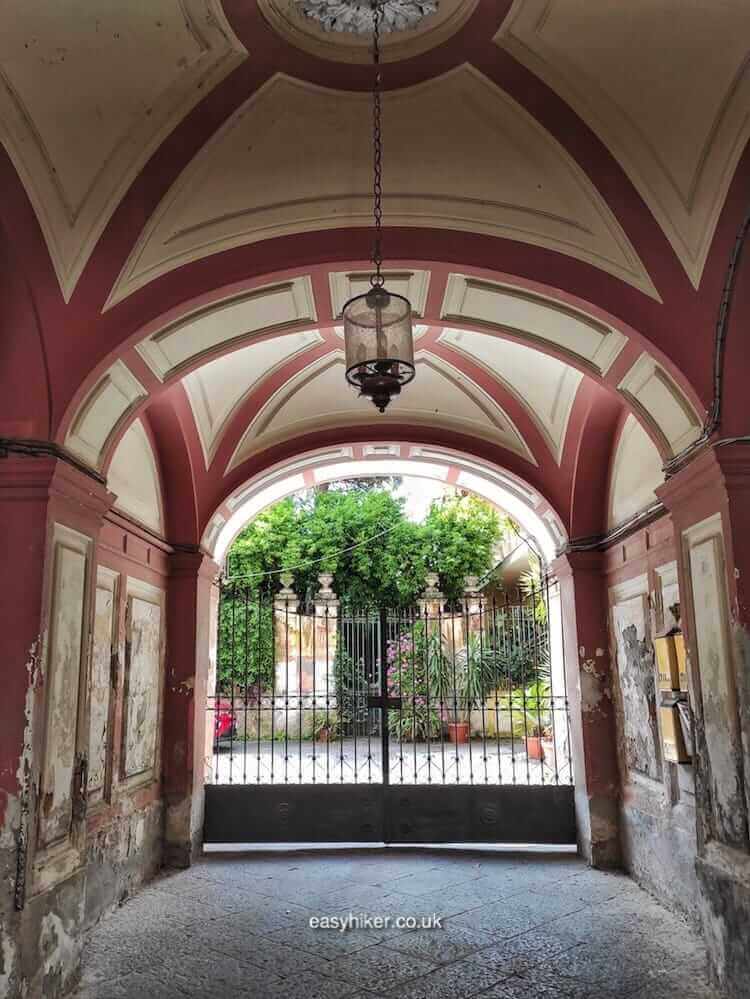
… and some that are perhaps less natural and, well, more manufactured.
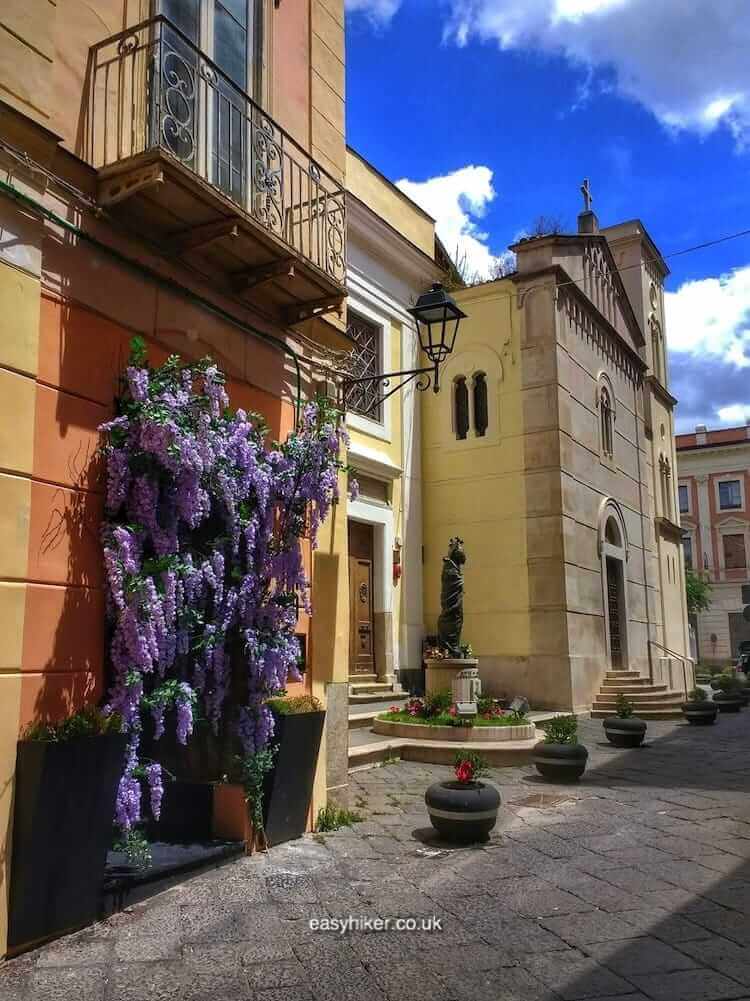
“Do not take that picture!’, Mrs Easy Hiker shouted at me from across the road, “That is not a real plant! It is fake!”
But I took the photo anyway – because I accept that real and fake are flexible categories. Mere details like those can be ignored. All that counts is the effect! Sometimes I wonder: have I perhaps spent too much time in Italy already?
If you want to visit the Royal Palace of Caserta: regional trains run frequently from Naples Central Station and take about 40 minutes. When you exit Caserta station, you can already see the Reggia (the Palace) on the far side of the grassy meadow in front of you.